What Is a Japanese Sword? -A Legacy Preserved Through a Thousand Years of Human Hands-

The Japanese sword is far more than a weapon.
If it had been merely a tool of war, it would have shared the fate of countless other weapons throughout history—used, discarded, rusted away, and forgotten once the conflicts that required it had passed.
Yet throughout Japan, swords forged hundreds of years ago, and in some cases nearly a thousand years ago, still survive.
This is remarkable when one considers the material itself. Iron does not preserve naturally. Left unattended, it corrodes. To survive for centuries, it requires constant care and deliberate preservation.
So why do these swords still exist?
Because generation after generation chose to protect them.
The story of the Japanese sword is therefore not simply the story of a weapon. It is the story of a culture that believed certain objects were worth preserving beyond the span of a single lifetime.
To understand that story, we must begin long before the first samurai ever drew a blade.
The Origins of Blade Culture in Japan
The Jōmon Period (c. 14,000 BCE – 400 BCE)
During the Jōmon period, the people of the Japanese archipelago relied primarily on stone tools. Obsidian blades, prized for their sharpness, were widely used, and many finely polished stone implements have been recovered from archaeological sites.
Some of these objects display forms that seem surprisingly familiar to modern eyes. While they were not swords, they reveal an early appreciation for the cutting edge itself.
More intriguing is the possibility that blades already possessed symbolic meaning.

Archaeologists have discovered stone tools arranged in ritual contexts, as well as objects whose elaborate forms appear to exceed practical necessity. Such finds suggest that edged tools may have been valued not only for their usefulness, but also for their social and spiritual significance.
Some researchers have even proposed that ironworking may have existed in Japan earlier than generally accepted, citing the abundance of iron sand deposits and occasional discoveries of iron fragments. However, no conclusive evidence of a systematic iron industry from this period has yet been identified.
What is clear is that the concept of the blade—as something more than a mere tool—may have deep roots within Japanese culture.
The Arrival of Iron
The Yayoi Period (c. 300 BCE – 300 CE)
The appearance of iron transformed life in the Japanese archipelago.
Most scholars believe iron technology arrived through networks of exchange linking Japan with the Korean Peninsula and the Asian mainland. Archaeological evidence shows that iron tools appeared during the early Yayoi period, and that local communities soon learned not only to use imported iron, but also to rework and forge it themselves.
By the middle of the Yayoi period, ironworking had become an established skill within Japan.
This era also produced large numbers of bronze swords.
Curiously, many of these bronze swords show little evidence of actual use. They often lack practical combat features, and large numbers have been discovered in ritual deposits rather than military contexts.


Such evidence suggests that many were not intended for battle.
Instead, they likely served as symbols of authority, status, or religious significance.
This pattern would continue throughout Japanese history.
From ancient ritual swords dedicated at shrines to the legendary Kusanagi-no-Tsurugi, one of the Imperial Regalia described in Japan's classical chronicles, swords came to occupy a place that extended well beyond warfare.
For centuries, blades were believed to possess the power to ward off evil, repel misfortune, and protect both individuals and households.
Even at this early stage, the sword was becoming something more than a weapon.
Swords and Power
The Kofun Period (3rd–7th Century)
The Kofun period saw the widespread use of straight iron swords.
Many have been excavated from large burial mounds constructed for powerful rulers and elites. Some are richly decorated, emphasizing prestige rather than practicality.
These swords functioned as symbols of authority and status.
At this point, however, the distinctive curvature associated with the Japanese sword had not yet appeared.
The evolution of the sword was still underway.
The Birth of the Japanese Sword
The Asuka and Nara Periods (7th–8th Century)
As Japan developed a centralized state under the ritsuryō system, sword design gradually began to change.
Straight blades remained common, but examples displaying gentle curvature started to emerge.


This was a transitional era—a bridge between the straight swords of antiquity and the curved swords that would later define Japan.
The Heian Period (Late 8th–12th Century)
Sometime around the ninth century, the curved sword reached a recognizable form.
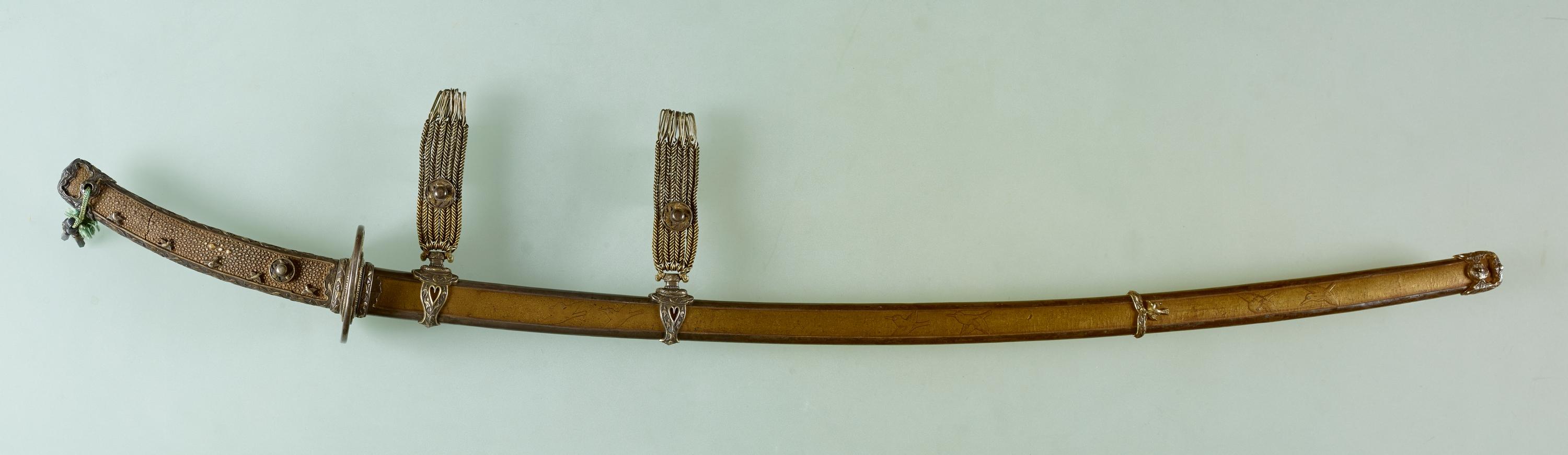
This was the birth of the tachi, the direct ancestor of the Japanese sword.
Designed primarily for mounted combat, the tachi was suspended from the waist with its cutting edge facing downward. Its curved shape was not merely decorative. Rather, it represented a practical response to the realities of cavalry warfare.
In many respects, the essential form of the Japanese sword was established during this period.
The silhouette familiar throughout the world today first emerged here.
The Rise of the Samurai Sword
The Kamakura Period (Late 12th–14th Century)
The rise of the samurai class transformed Japanese swordmaking.
As military governments gained power, swordsmiths refined their craft to unprecedented levels.
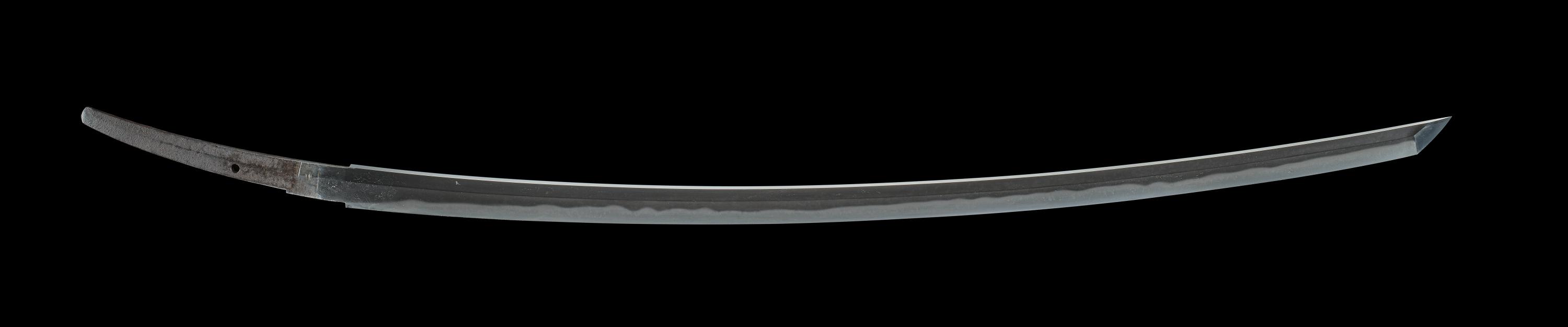
Techniques such as repeated folding and forging improved the quality of the steel. Differential hardening created the hamon, the visible temper line that remains one of the defining aesthetic features of the Japanese sword. The texture of the steel itself, known as jihada, became an object of admiration.
Function and beauty became inseparable.
The sword was no longer valued solely for its effectiveness in combat. It was increasingly appreciated as a work of craftsmanship and artistic expression.
Many of the blades admired by collectors today trace their origins to this remarkable period.
Adaptation Through War
The Muromachi Period (14th–16th Century)
As warfare expanded during the Muromachi period, demand for swords increased dramatically.
The battlefield itself was changing.
Mounted combat became less dominant, while infantry engagements grew increasingly important. In response, a new style of sword became widespread: the uchigatana.
Unlike the tachi, which was worn suspended from cords, the uchigatana was thrust directly through the belt with the cutting edge facing upward. This allowed for faster deployment and better suited the demands of close combat.
The sword evolved alongside the society that carried it.
Historical records also indicate that Japanese swords were exported abroad during this era. They were valued throughout East and Southeast Asia as both practical weapons and prestigious trade goods.
The reputation of Japanese craftsmanship had begun to extend beyond Japan's shores.

From Weapon to Heirloom
The Edo Period (17th–19th Century)
When centuries of civil war finally came to an end, the role of the sword changed once again.
It was no longer primarily a battlefield weapon.
Yet sword production continued.
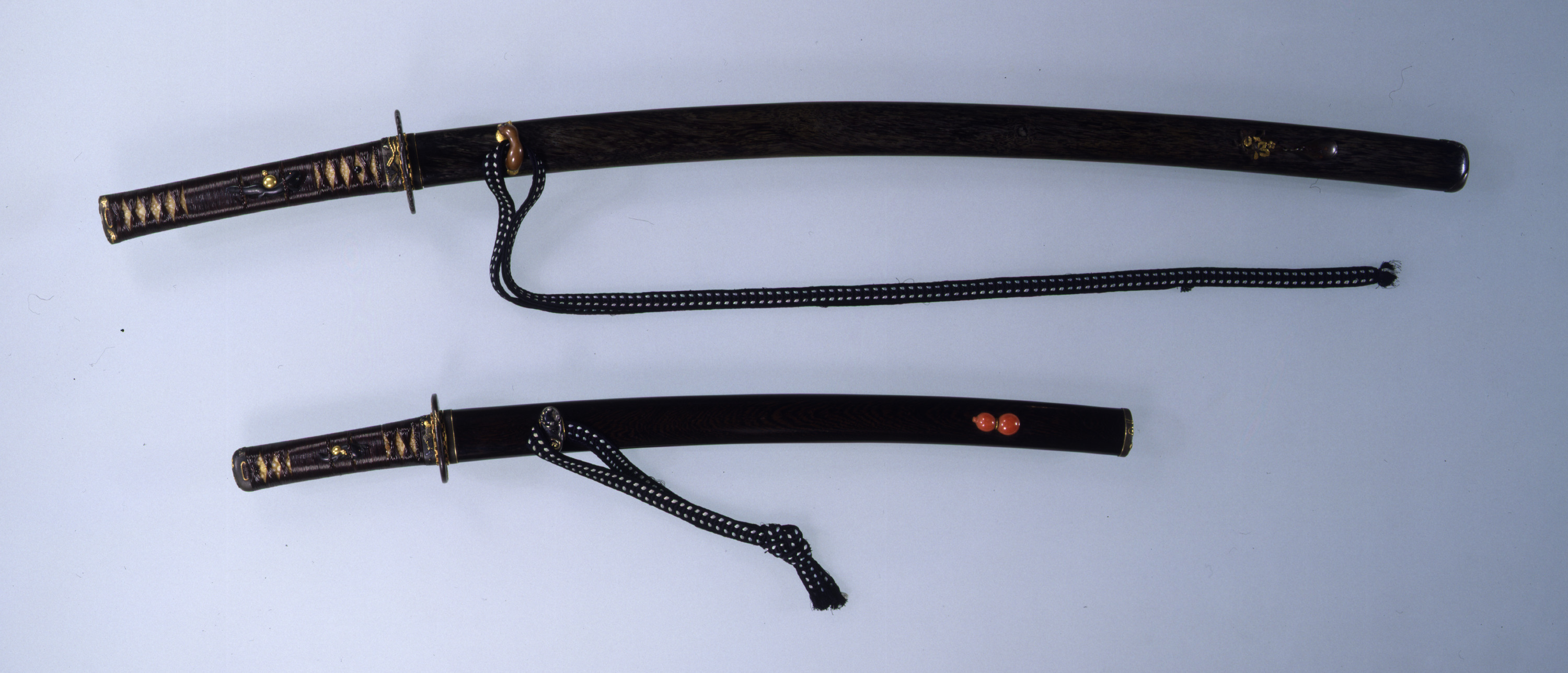
During the Edo period, the sword became a symbol of the samurai class, a marker of social identity, and a visible expression of family heritage.
Many swords that had once seen combat were preserved as treasured possessions. Others were commissioned not for war, but as objects of status, ceremony, and cultural significance.
The sword's importance increasingly lay in what it represented rather than what it could do.
From the Meiji Era to the Second World War
(Late 19th–20th Century)
The abolition of the samurai class in the late nineteenth century fundamentally changed Japanese society.
The public wearing of swords was largely prohibited, except among certain military and government personnel.
Yet the sword itself did not disappear.
Former samurai families, noble households, and old daimyo lineages continued to preserve swords as family treasures. Even as Japan modernized, many families maintained the belief that these blades connected them to their history and ancestors.
The tradition of preservation endured.
Why Have Japanese Swords Survived?
Iron rusts.
That simple fact makes the survival of ancient swords extraordinary.
To preserve a blade for centuries requires constant effort. Someone must clean it, oil it, store it properly, and protect it from neglect.
If one generation is roughly thirty years, a sword that has survived for five hundred years has passed through at least sixteen or seventeen generations of caretakers.
Every surviving sword exists because countless individuals decided it was worth preserving.
That is not an accident.
It is a conscious act repeated across centuries.
Why a Japanese Sword Is More Than a Weapon
Weapons are normally consumable objects. They are made for conflict and often disappear when that conflict ends.
Japanese swords followed a different path.
For centuries, blades were believed to possess spiritual significance. They were associated with protection, purification, discipline, and authority. They safeguarded households, marked social status, and connected families to their past.
They were passed down as heirlooms, exchanged as gifts, and dedicated to temples and shrines.
In many ways, the sword became woven into the cultural and spiritual fabric of Japan.
Had it been valued only as a weapon, it is difficult to imagine so many examples surviving to the present day.
Conclusion
The Japanese sword stands at the end of a blade tradition stretching back more than ten thousand years.
It represents the transformation of iron into something greater than a material object.
More importantly, it represents continuity.
Every surviving sword carries within it the decisions of countless people who chose to preserve it rather than discard it. In that sense, a Japanese sword contains more than steel.
It contains time.
Its true significance lies not only in its craftsmanship, beauty, or sharpness, but in the unbroken chain of human hands that protected it across the centuries.
That enduring continuity of memory, culture, and stewardship is what makes the Japanese sword unique.
Link
Image courtesy of Tokyo National Museum via ColBase (National Institutes for Cultural Heritage, Japan).
画像提供:東京国立博物館/ColBase(国立文化財機構所蔵品統合検索システム)
Leave a comment